
Andrew Shaw's Back Hypertrophy Superset Workout
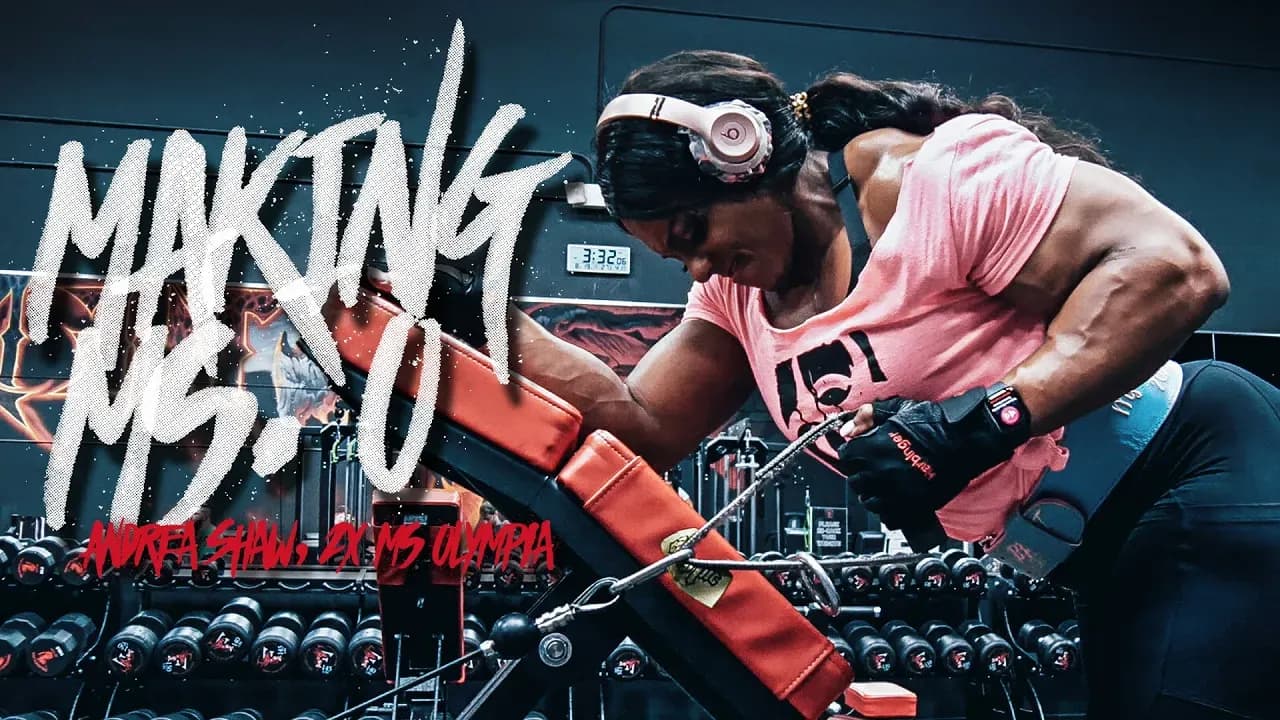
Andrea Shaw is a decorated professional bodybuilder and multi-time Ms. Olympia known for her symmetrical development and stage conditioning. In this session she emphasizes a blend of heavy compound lifts for structural thickness and targeted cable work to sculpt the rear delts, lats, and spinal erectors.
Her training approach favors starting with heavy, free-weight movements to take advantage of fresh strength and finishing with higher-rep cable work to maintain continuous tension, drive a deep pump, and fine-tune muscle detail for posing and stage presentation.
About the Program
Category: Hypertrophy
This focused back hypertrophy session blends heavy free-weight pulls with higher-rep cable finisher work and supersets to maximize muscle tension and time efficiency. The workout starts with compound free-weight movements to allow you to use higher loads with full-body stability, then moves into cable-based exercises to maintain continuous tension and refine upper-back and rear-delt detail.
Best suited for intermediate trainees looking to build a thicker, more detailed back and improve the V-taper. Expect heavy pulls (rack pulls, T-bar rows) first, followed by cable rows and face pulls performed with controlled tempo and minimal rest to emphasize the pump and mind–muscle connection.
Workout Schedule
Back Day - Heavy Pulls & Cable Finishers
- compound
1. T-Bar Row
- 4x8-10
Tips
How to perform: Load a T-bar or landmine with moderate-heavy weight. Hinge at the hips with a neutral spine, chest up, and pull the handle toward your sternum, squeezing the shoulder blades together at the top. Use a controlled 2-second pull and a 3-4 second eccentric to maximize time under tension.
Muscles worked, common mistakes, and benefits: Primary muscles worked include the upper back and lats, with secondary involvement from the biceps and rear delts. Common mistakes include rounding the lower back and using momentum; maintain proper form by bracing your core and keeping the torso stable. T-bar rows build mid-back thickness and help create the classic 'V' shape when combined with lat work.
- compound
2. Rack Pull
- 4x5-6
Tips
How to perform: Set a barbell on safety pins or a rack at just below knee height. Stand with feet hip-width, grip the bar just outside the legs, brace your lats and core, then drive through the heels to extend the hips and knees until standing. Lower with control back to the pins.
Muscles worked, common mistakes, and benefits: Primary muscles worked are the spinal erectors and lower back with strong recruitment from glutes and hamstrings. Common mistakes include hyperextending the lumbar spine and using excessive shrugging; maintain a neutral spine and controlled lockout. Rack pulls build posterior chain strength and increase lockout strength for deadlift variations.
- compound
- 3x12-15 (superset)
Tips
How to perform: Sit tall on the row machine with feet braced and knees slightly bent. Pull the handle toward your lower chest with a 2-second concentric, pause and squeeze scapulae together, then return on a 3-4 second eccentric. Keep the torso stable and avoid excessive lean-back.
Muscles worked, common mistakes, and benefits: Muscles worked include the lats and upper back with secondary biceps and rear-delt activation. Proper form prevents using momentum and ensures the target muscles do the work; common mistakes are jerking the torso and overusing the arms. Seated cable rows provide continuous tension and are ideal for pairing in superset finishers to increase the pump.
4. Face Pull (Cable)
- 3x15-20 (superset)
Tips
How to perform: Attach a rope to a high cable and pull toward your forehead while externally rotating the shoulders so the hands finish near the ears. Use a controlled 2-second pull and emphasize a full scapular retraction at the end of each rep. Maintain an upright torso and engaged core.
Muscles worked, common mistakes, and benefits: Primary muscles worked are the rear deltoids and upper traps with secondary involvement of the rotator cuff and upper back. Common mistakes include pulling with the hands or letting the elbows drop; focus on leading with the elbows and maintaining proper form. Face pulls improve shoulder health, posture, and upper-back detail.
5. Straight-Arm Pulldown (Cable)
- 3x15-20
Tips
How to perform: Stand facing a high pulley with a straight bar or rope. Keeping arms straight (or slightly bent), pull the bar down in an arc until your hands reach your thighs while driving the lats down and back. Control the return to feel the lats lengthen under tension.
Muscles worked, common mistakes, and benefits: Muscles worked are primarily the lats and teres major with limited biceps involvement. Common mistakes include using the lower back to 'swing' the weight or bending the arms too much; maintain a strong torso and proper form. Straight-arm pulldowns are excellent for isolating the lats and finishing a session for that 3D effect.