
Chris Bumstead's Chest & Back Hypertrophy Session
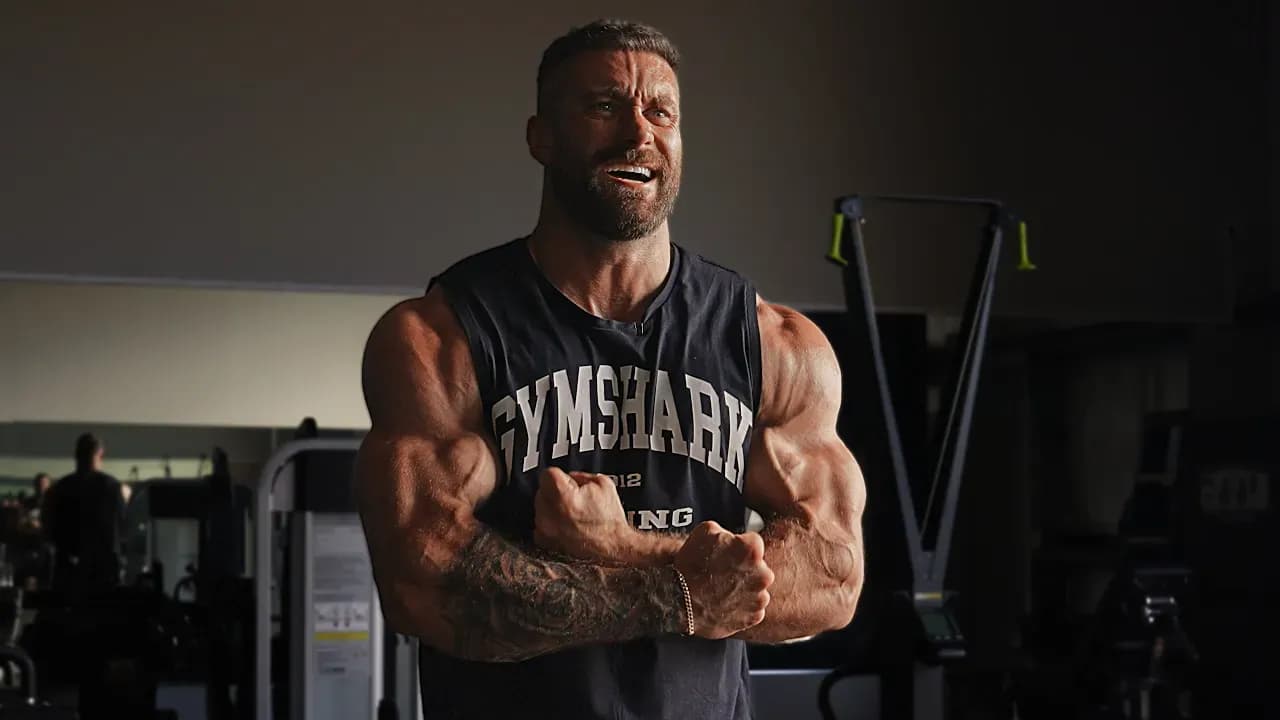
My name is Chris Bumstead and I am an IFBB Classic Physique Pro from Ottawa, Canada. Growing up, I built the base of my physique training for football, basketball and track and field in high school. It wasn’t until I met my friend, coach and now brother-in-law, Iain Valliere, that I even thought about competing. In 2014, at the age of 19, I participated in my first bodybuilding show and fell in love with competing.In 2015, I won bodybuilding Junior Canadian Nationals and in 2016 I earned my IFBB pro card as the Bodybuilding Heavyweight Champion at the IFBB North American Championships at the age of 21. After turning pro, I switched over to the Classic Physique division and in 2017 and in 2018 I qualified and competed in the Mr. Olympia competition, where I finished second place both years. I currently still reside in Canada where I am training to obtain that first-place position for the Classic Physique Olympia.I started out purely with the love of training hard and wanting to get huge. Slowly I started to build a more complex love of fitness. Physique wise switching to the Classic division drove my passion through the roof, thinking now of symmetry aesthetics and portraying it all as a form of art through posing is such a different dynamic than just trying to be huge. And in the overall fitness and health aspect, I went from eating whatever was in sight to try and grow, to actually understanding the nutrients and how much I should be taking in to optimize recovery, growth and most importantly health. A lot of my increased views on overall health came when I was diagnosed with an autoimmune disease, IGA Nephropathy. While this may cut my career as a professional competitor short, my love for fitness and training will always be the most important aspect of my life that I will continue to uphold for as long as I possibly can. We all face our own challenges in life and I’m just grateful to have a positive output such as the gym I can always look forward to through the good and the bad.
About the Program
Category: Hypertrophy
This chest and back hypertrophy session pairs pressing and pulling movements to maximize time under tension and promote balanced upper-body development. The workout begins with calisthenic strength work (dips and supinated pull-ups) to establish shoulder and scapular stability, then moves into heavier incline pressing and chest-supported rowing to build muscle across the upper chest and lats. Finish with targeted rotator-cuff work and lateral raises to protect the shoulder and add deltoid width.
Ideal for intermediate trainees seeking to build chest and back size while maintaining shoulder health. Expect supersets that combine opposing movements, moderate rep ranges (6–12) for hypertrophy and strength endurance, and accessory isolation work to improve joint integrity and shoulder shape.
Workout Schedule
Chest & Back (Superset Focus)
SUPERSETS
SUPERSETS
compound- 4x6-10 (quarters at bottom)
Tips
Perform dips on parallel bars with a controlled descent. Lower into a full dip, then perform a small quarter-range pause/hold at the bottom before pressing up explosively. Keep chest slightly leaned forward to emphasize the lower chest and protect the shoulders; scapula should be retracted and core braced throughout.
Muscles worked: chest (primary), triceps and front deltoids (secondary). Common mistakes include excessive forward shoulder rotation and shrugging the shoulders; proper form requires controlled scapular position and avoiding deep uncontrolled depth if it causes pain. Benefits include increased pressing strength and improved chest thickness, especially when performed with a deliberate bottom-quarter emphasis to build stretch tolerance.
compound- 4x6-10 (quarters at bottom)
Tips
How to perform: Using a supinated (underhand) grip, hang from the bar and initiate the pull by retracting the scapula and driving the elbows down and back. Pull the chin over the bar, then lower under control, pausing for a quarter-range at the bottom before pulling back up. Emphasize full shoulder extension and a tight midline.
Muscles worked: upper back/lats (primary), biceps and forearms (secondary). Proper form avoids kipping and excessive neck extension; common mistakes include shrugging the shoulders and swinging. Benefits include improved lat length-tension, increased biceps involvement, and enhanced shoulder stability in the finished position.
SUPERSETS
SUPERSETS
compound- 3x8-10
Tips
How to perform: Lie on an incline bench (30–45 degrees). Grip the bar slightly wider than shoulder-width, retract the scapula and maintain a tight core. Lower the bar under control to the upper chest, pause briefly, and press upward while driving the shoulders back and maintaining a slight arch. Control the eccentric and avoid flaring the elbows excessively.
Muscles worked: upper chest (primary), front deltoids and triceps (secondary). Proper form emphasizes scapular retraction and controlled tempo; common mistakes include pressing from a rounded back or flaring elbows which can stress the shoulder. Benefits include targeted upper-chest development and improved pressing mechanics when performed deliberately.
compound- 3x8-10
Tips
How to perform: Set an incline bench and lie face-down with chest supported. Hold dumbbells with a semi-pronated (neutral-to-slightly-pronated) grip and row the weights toward your lower ribs, squeezing the shoulder blades together at the top. Lower under control and maintain a neutral neck and braced core throughout.
Muscles worked: upper back/lats (primary), rear delts and biceps (secondary). Common mistakes include using momentum or letting the chest lift off the bench; proper form requires strict rowing with scapular retraction. Benefits include targeted lat/upper-back development without lower-back strain and improved posture.
- isometric
- 3x20 (light, high-rep sets)
Tips
How to perform: Attach a band or use an inertia tool and perform controlled external rotations at the shoulder. Keep the elbow pinned to the side at 90 degrees and rotate the forearm away from the body, focusing on slow tempo and diaphragmatic breathing. Perform until a burning sensation in the joint for stability-focused adaptation.
Muscles worked: shoulder rotators/shoulder complex (primary), rear delts and scapular stabilizers (secondary). Proper form avoids compensatory shoulder elevation and torso rotation; common mistakes include using the whole arm or shrugging. Benefits include improved rotator-cuff strength, better shoulder health, and greater tolerance to overhead and pressing work.
- isolation
- 3x12-15 (optional burnout/drop set)
Tips
How to perform: Set an incline bench at about 30 degrees and lie face-down holding light dumbbells. With a slight bend in the elbow, raise the dumbbells out to the side to shoulder height, leading with the elbow and maintaining a neutral wrist. Lower under control and keep tension on the middle deltoid throughout the set.
Muscles worked: shoulders (middle deltoid primary), trapezius and front deltoids (secondary). Common mistakes include swinging the weights, using too much momentum, or raising the arms too high which recruits the traps; proper form prioritizes slow control and consistent tension. Benefits include increased deltoid width and improved shoulder symmetry.