
Chris Bumstead's Arms Hypertrophy Pump Workout
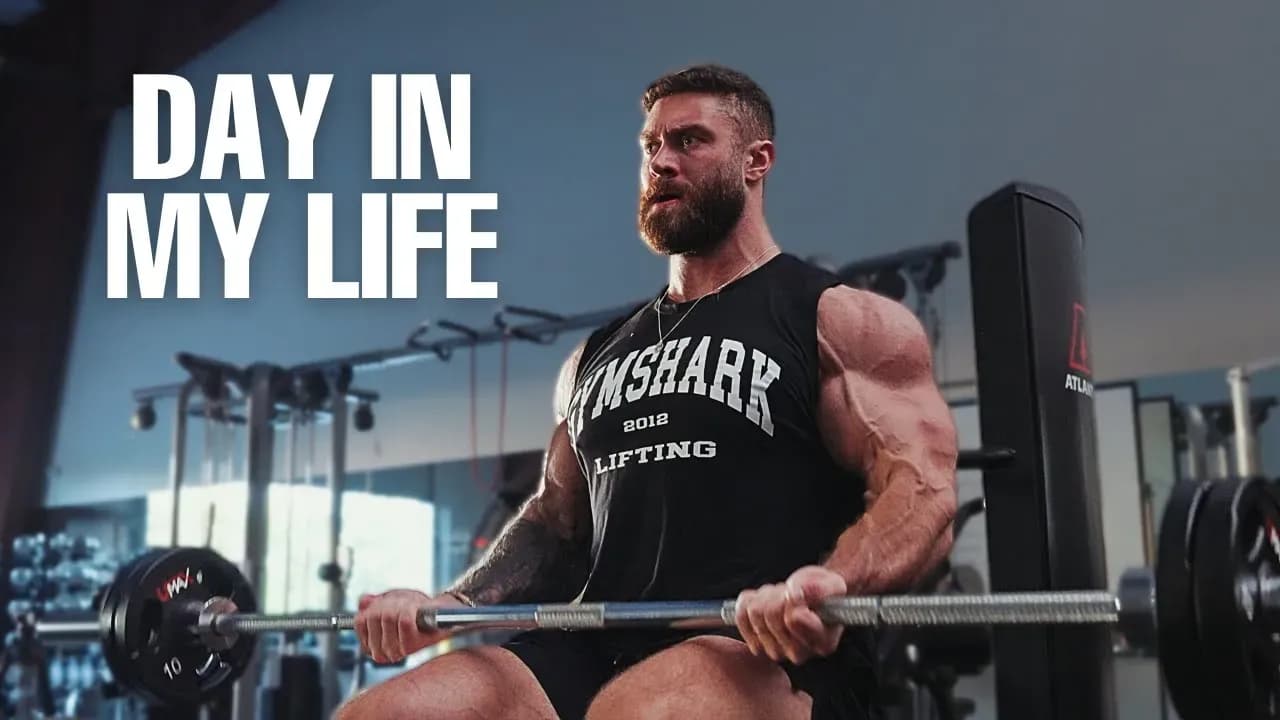
My name is Chris Bumstead and I am an IFBB Classic Physique Pro from Ottawa, Canada. Growing up, I built the base of my physique training for football, basketball and track and field in high school. It wasn’t until I met my friend, coach and now brother-in-law, Iain Valliere, that I even thought about competing. In 2014, at the age of 19, I participated in my first bodybuilding show and fell in love with competing.In 2015, I won bodybuilding Junior Canadian Nationals and in 2016 I earned my IFBB pro card as the Bodybuilding Heavyweight Champion at the IFBB North American Championships at the age of 21. After turning pro, I switched over to the Classic Physique division and in 2017 and in 2018 I qualified and competed in the Mr. Olympia competition, where I finished second place both years. I currently still reside in Canada where I am training to obtain that first-place position for the Classic Physique Olympia.I started out purely with the love of training hard and wanting to get huge. Slowly I started to build a more complex love of fitness. Physique wise switching to the Classic division drove my passion through the roof, thinking now of symmetry aesthetics and portraying it all as a form of art through posing is such a different dynamic than just trying to be huge. And in the overall fitness and health aspect, I went from eating whatever was in sight to try and grow, to actually understanding the nutrients and how much I should be taking in to optimize recovery, growth and most importantly health. A lot of my increased views on overall health came when I was diagnosed with an autoimmune disease, IGA Nephropathy. While this may cut my career as a professional competitor short, my love for fitness and training will always be the most important aspect of my life that I will continue to uphold for as long as I possibly can. We all face our own challenges in life and I’m just grateful to have a positive output such as the gym I can always look forward to through the good and the bad.
About the Program
Category: Hypertrophy
This focused arms hypertrophy session targets both biceps and triceps with a mix of compound and isolation movements, tempo variations, mid-range isometrics, and partials to maximize blood flow and mechanical tension. The session is organized into biceps and triceps blocks with supersets to increase density and produce a sustained pump while keeping total gym time efficient.
Ideal for intermediate trainees who want targeted arm growth without excessive volume, this workout balances heavy and higher-rep sets, teaching controlled eccentric lengthening and mid-range pauses to emphasize time under tension and joint health. Expect three main biceps exercises followed by three triceps exercises, then repeat as prescribed for a full arm specialization session.
Workout Schedule
Arms Hypertrophy - Biceps & Triceps
SUPERSETS
SUPERSETS
compound- 3 sets AMRAP
Tips
How to perform: Grip the bar with a supinated (underhand) grip, hands about shoulder-width. Start from full hang, pull your chest toward the bar while driving the elbows down and back. Pause and squeeze the biceps at the top of the rep. Use full extension at the bottom. For AMRAP sets, go to near-failure while maintaining controlled form.
Muscles worked: primary biceps, secondary lats and forearms. Proper form avoids excessive kipping or swinging; common mistakes include shrugging the shoulders and using momentum. Benefits include increased biceps peak development and improved upper-back strength when done with a supinated grip.
isolation1.2. Kneeling Olivia Curl
- 3x10-12
Tips
How to perform: Kneel on a bench or pad with torso upright and curl a dumbbell or barbell with a pronounced arc, driving the elbow up toward the head to emphasize the peak contraction. Pause briefly at the top and control the negative back to the start position. Focus on bringing the biceps insertion toward the ear to increase contraction intensity.
Muscles worked: primary biceps, secondary front deltoids. Proper form requires keeping the elbow fixed and minimizing torso swing. Common mistakes are using momentum and lifting with the shoulder. Benefit is a strong peak contraction and targeted biceps stimulation.
SUPERSETS
SUPERSETS
2.1. Behind-the-Back Barbell Curl
- 3x10-12
Tips
How to perform: Stand holding a barbell behind your thighs with a supinated grip. Curl the bar up while keeping the elbows close to the body and focus on a deep stretch at the bottom before contracting. Control the eccentric to emphasize lengthening under load.
Muscles worked: primary biceps, secondary forearms and brachialis. Proper form is to avoid using torso momentum and not flaring the elbows. This exercise places a unique stretch on the long head of the biceps and helps develop thickness through an extended range of motion.
isolation2.2. Seated Reverse Curl
- 3x10-12
Tips
How to perform: Sit with a barbell or EZ-bar and use a pronated (overhand) grip. Curl the weight upward focusing on forearm and brachioradialis contraction, then lower under control. Keep the wrists neutral and elbows tucked.
Muscles worked: primary forearms (brachioradialis), secondary biceps. Common mistakes include letting the wrists bend or using the shoulders to assist. Benefits are increased forearm thickness and improved elbow stability for pulling movements.
SUPERSETS
SUPERSETS
3.1. Machine Dip (mid-range concentric pause)
- 3x15-20 (3s mid-range pause)
Tips
How to perform: Set up on a triceps dip machine or assisted dip station. Lower with control to your target depth, then press to the mid-range and hold the concentric for about 3 seconds before finishing the rep. Emphasize pressing with the triceps rather than excessive forward lean.
Muscles worked: primary triceps, secondary chest and front deltoids. Proper form avoids locking the shoulders and using momentum; common mistakes include excessive torso lean or shallow range of motion. The mid-range pause increases time under tension and stimulates triceps head recruitment.
isolation- 3x10-12 + partials 8-10
Tips
How to perform: On a triceps extension or lag machine, lift to a mid-range position and hold isometrically for 15–20 seconds, then reduce load and perform 10–12 full reps, then increase load and finish with 8–10 partial reps. Use controlled tempo and focus on feeling the long head of the triceps during mid-range holds.
Muscles worked: primary triceps (long head emphasis), secondary shoulders. Proper form requires avoiding excessive scapular elevation and making clean weight changes between drops/partials. This hybrid V-set combines isometrics, full reps, and partials for maximal metabolic stress and hypertrophy.